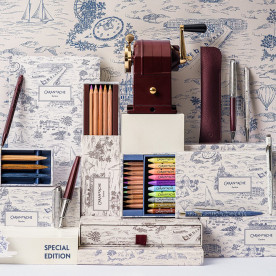




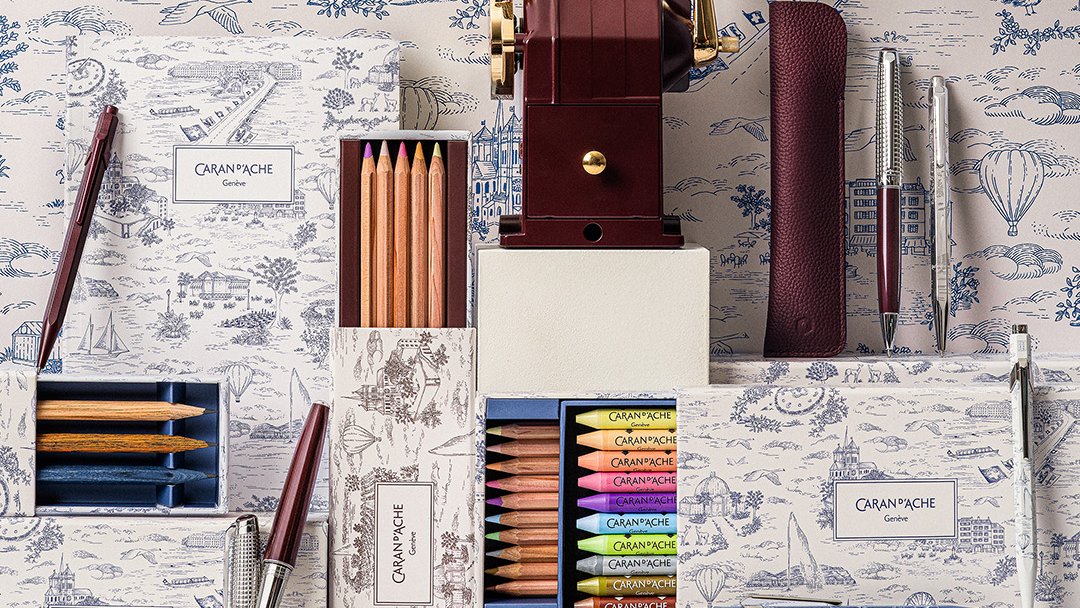
Finely drawn scenes in a single ink colour, scattered across a pale fabric: that is toile de Jouy. You may know the pattern from curtains or upholstery. For Christmas 2026, Caran d'Ache uses it to draw its own city, Geneva.
Here you can read where the pattern comes from, who drew the Geneva motif and how it found its way onto pens, pencils and boxes.
What does toile de Jouy mean?
Literally: cloth from Jouy. Jouy-en-Josas lies near Versailles, and it was there, in 1760, that Christophe-Philippe Oberkampf set up a works for printing cotton. He printed first with wooden blocks and later with copper plates, which made far finer lines possible. Many of the best known scenes were drawn by Jean-Baptiste Huet.
Traditionally, the pattern shows life in the countryside: shepherds, fields, scenes from everyday life. Small vignettes, each standing on its own, that together form one continuous pattern.
Geneva instead of shepherds
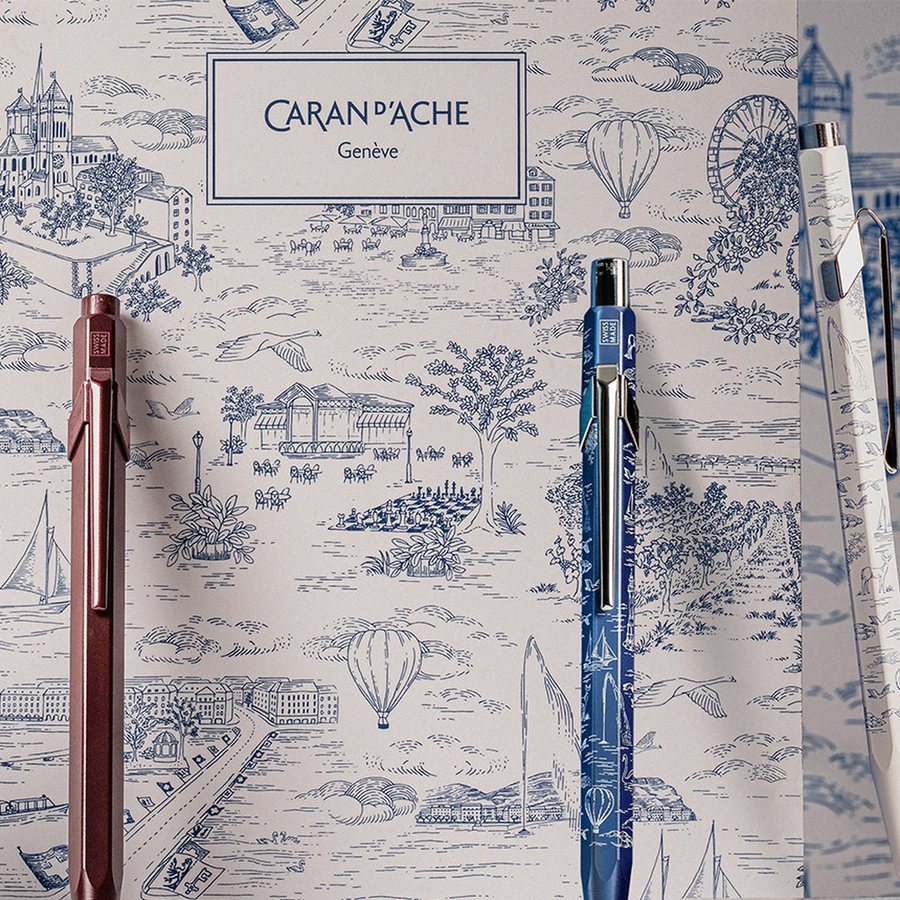
Caran d'Ache keeps that form but tells a different story. The house asked textile illustrator Suzanne Pinon to draw Geneva, the city Caran d'Ache comes from. She drew the entire motif with a Léman Ebony fountain pen, one of the house's own pens. In her drawing, the lake, gardens, old façades and patches of nature flow into one another.
A French tradition, a Swiss identity: the technique comes from France, the subject is Swiss.
What you will recognise in the motif
- The Jet d'EauThe great jet of water in the lake. On a still day it reaches up to 140 metres.
- The flower clockA clock made of flowers.
- The lake and the botanical gardenIn the drawing, water and greenery flow into one another.
- The Pont du Mont-BlancThe famous bridge in the city centre.
- The Place du Bourg-de-FourIn the old town, the oldest square in Geneva. Caran d'Ache has its own shop there.
Film
The Toile de Jouy collection on film, by Caran d'Ache.
One drawing, five ways to apply it
A fabric is flat and soft. A pen is round or hexagonal, made of aluminium, metal or lacquer. So Caran d'Ache adapts the drawing to each object, and that may well be the most fascinating thing about this collection.
Printed, in reversed colours
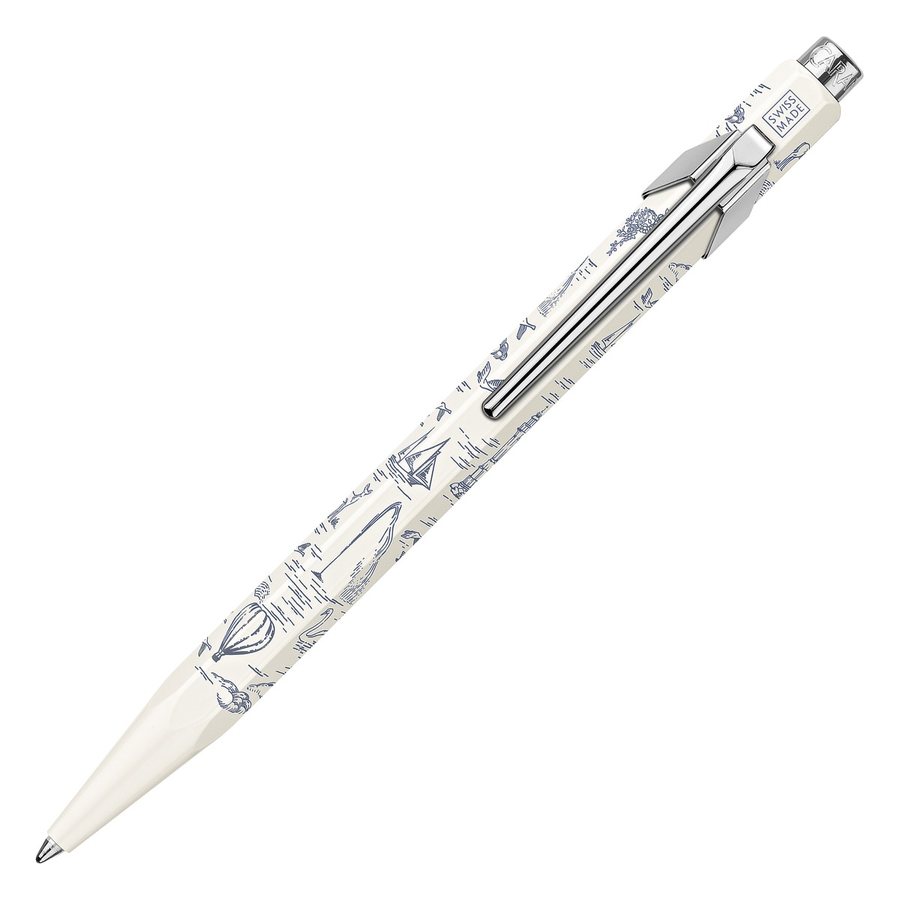
On the cream white Caran d'Ache 849, the motif is printed in blue, with the Jet d'Eau among other scenes. On the duo of ballpoint pen and mechanical pencil, it is the other way round: the ballpoint is cream white with blue scenes, the mechanical pencil vintage blue with cream scenes. The same drawing, with only the line and the background swapping colours.
View in the collection →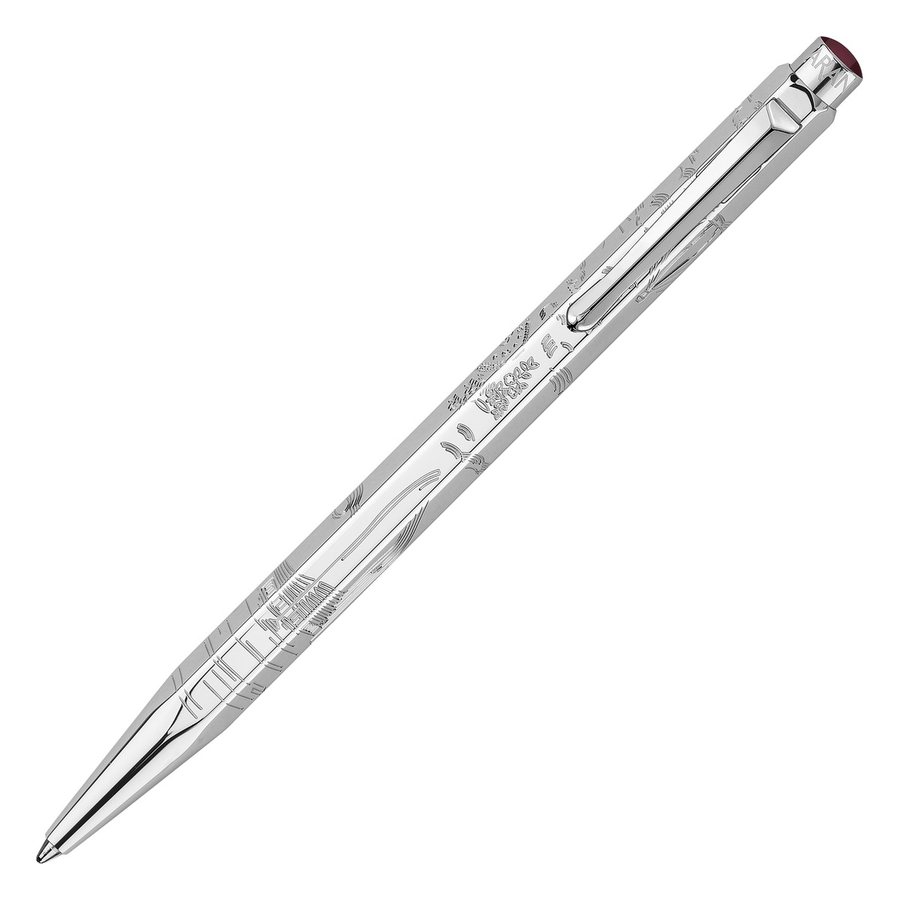
Milled in metal
On the Caran d'Ache Ecridor, the drawing becomes a guilloché pattern. Caran d'Ache mills the flower clock and the Jet d'Eau into the metal with its platinum finish. Engraved areas alternate with surfaces polished to a mirror shine, so you only really see the motif when you turn the pen slightly in the light.
View in the collection →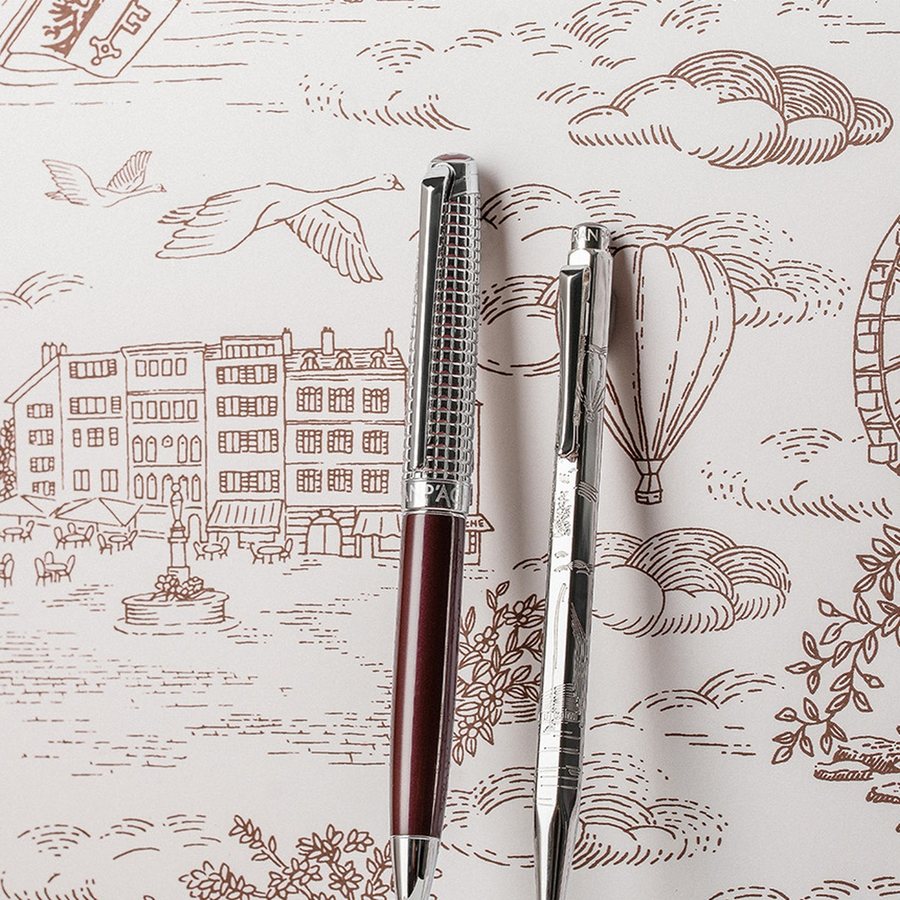
One detail: the cobblestones
The Caran d'Ache Léman does not borrow a whole scene, just a piece of street. The guilloché on the cap traces the cobblestones of the Place du Bourg-de-Four. Anyone who knows the square will recognise the pattern straight away.
View in the collection →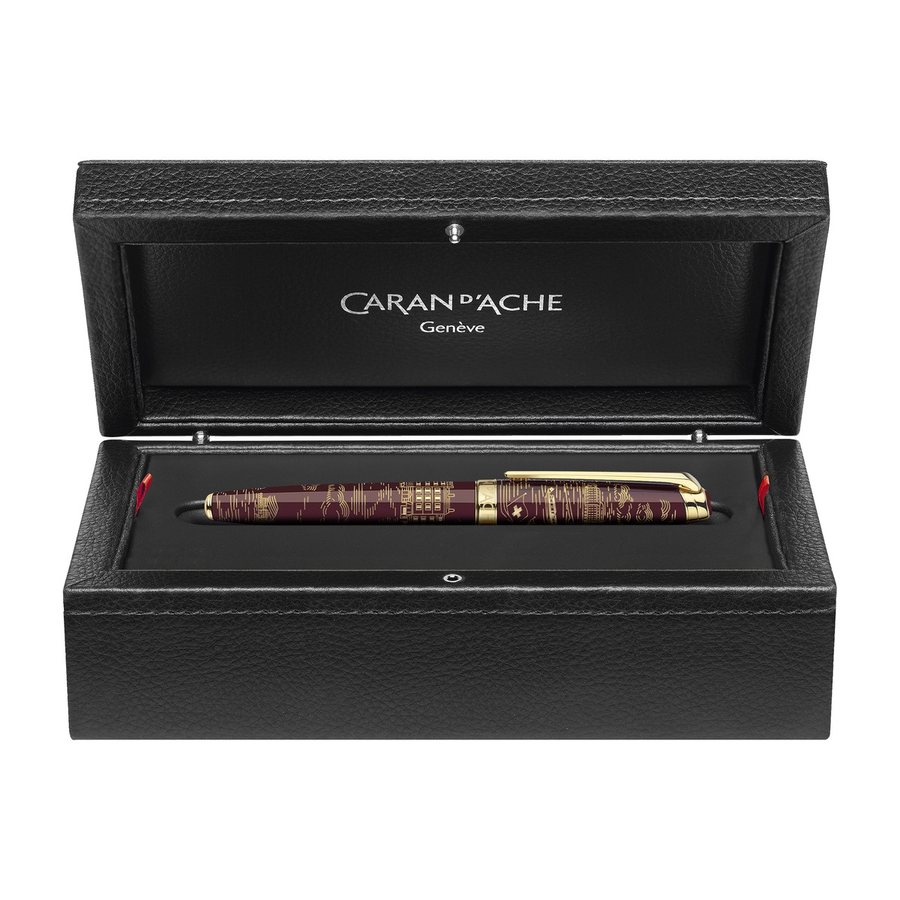
Engraved down to the gold
On the Limited Edition, the motif lies beneath a burgundy pearlescent lacquer. Caran d'Ache engraves the drawing through that lacquer, down to the gilded layer beneath, so the scenes light up in gold. Each barrel and each cap is worked separately to keep the engraving equally deep all over. According to the house, that takes almost an hour per pen. Little clouds and a hot air balloon link the Jet d'Eau, the Pont du Mont-Blanc and the Place du Bourg-de-Four, so the scenes run around the pen like a walk through the city.
View in the collection →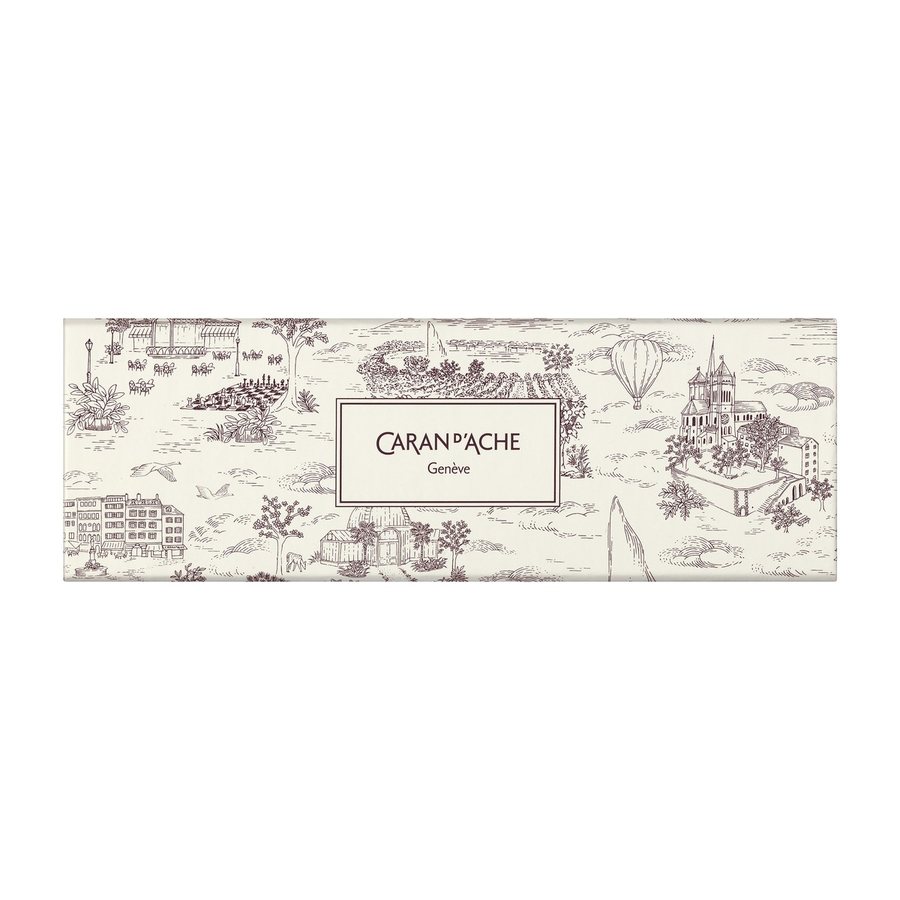
On the box
The burgundy 849 is completely plain, right down to the clip and the push button. Here, the motif is on the box. The boxes are part of the story: they are ivory, with the pattern in burgundy or in blue.
View in the collection →For those who draw, too
The motif does not stop at pens. Caran d'Ache has also made three pieces for artists.
The metal sharpener
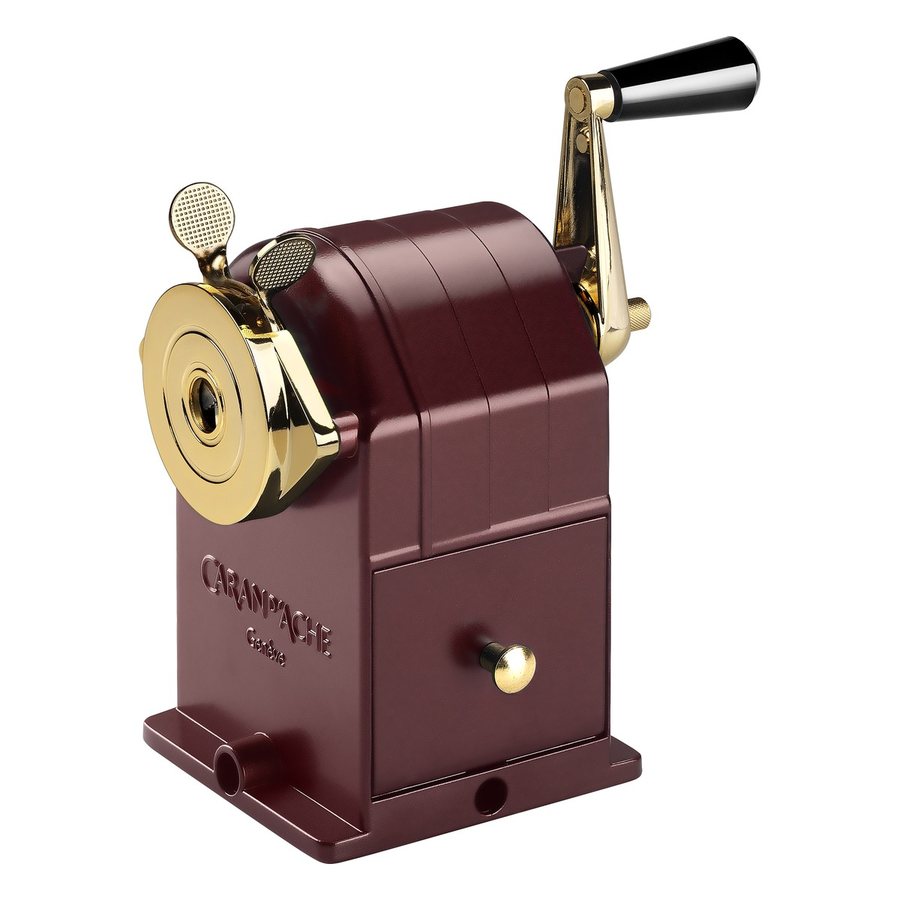
Caran d'Ache gives its classic metal sharpener a burgundy lacquer with gold details. The cutter is replaceable, and a metal clamp lets you fix the sharpener to a desk or a shelf. Here, the Geneva motif is on the box, in burgundy and beige.
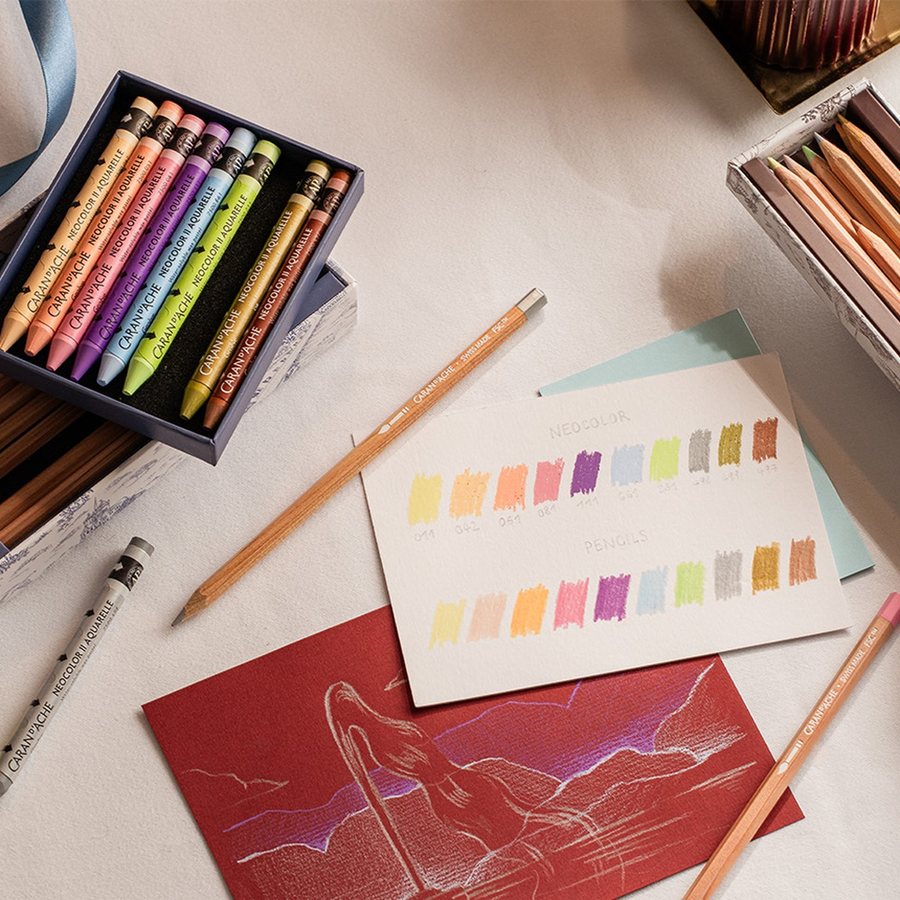
Two sets of watercolour pencils
The first holds ten Supracolor watercolour pencils in colours you will only find in this set: seven pastels and three metallics, in a burgundy and beige box. The Mixed Media set pairs ten watercolour pencils with ten Neocolor II Aquarelle wax pastels, which you can blend with water. That box is blue and beige. You will find more of the brand's pencils among our Caran d'Ache coloured pencils.
Toile de Jouy in three questions
What does toile de Jouy mean?
Cloth from Jouy, after Jouy-en-Josas near Versailles. It is a pattern of fine scenes in a single colour, traditionally showing country life.
Who drew the Caran d'Ache Geneva motif?
Textile illustrator Suzanne Pinon. She drew it with a Caran d'Ache Léman Ebony fountain pen.
Which places in Geneva appear in the motif?
Among others, the Jet d'Eau, the flower clock, the lake, the botanical garden, the Pont du Mont-Blanc and the Place du Bourg-de-Four.
All images: Caran d'Ache.